The Science of Comfort: Analyzing the Sam Phraya Foothill Microclimate
While the coastal town of Hua Hin is famous for its seaside charm, retirees quickly realize that tropical humidity and trapped urban heat can heavily impact daily vitality. Just fifteen minutes inland, a completely unique weather environment offers a refreshing alternative.
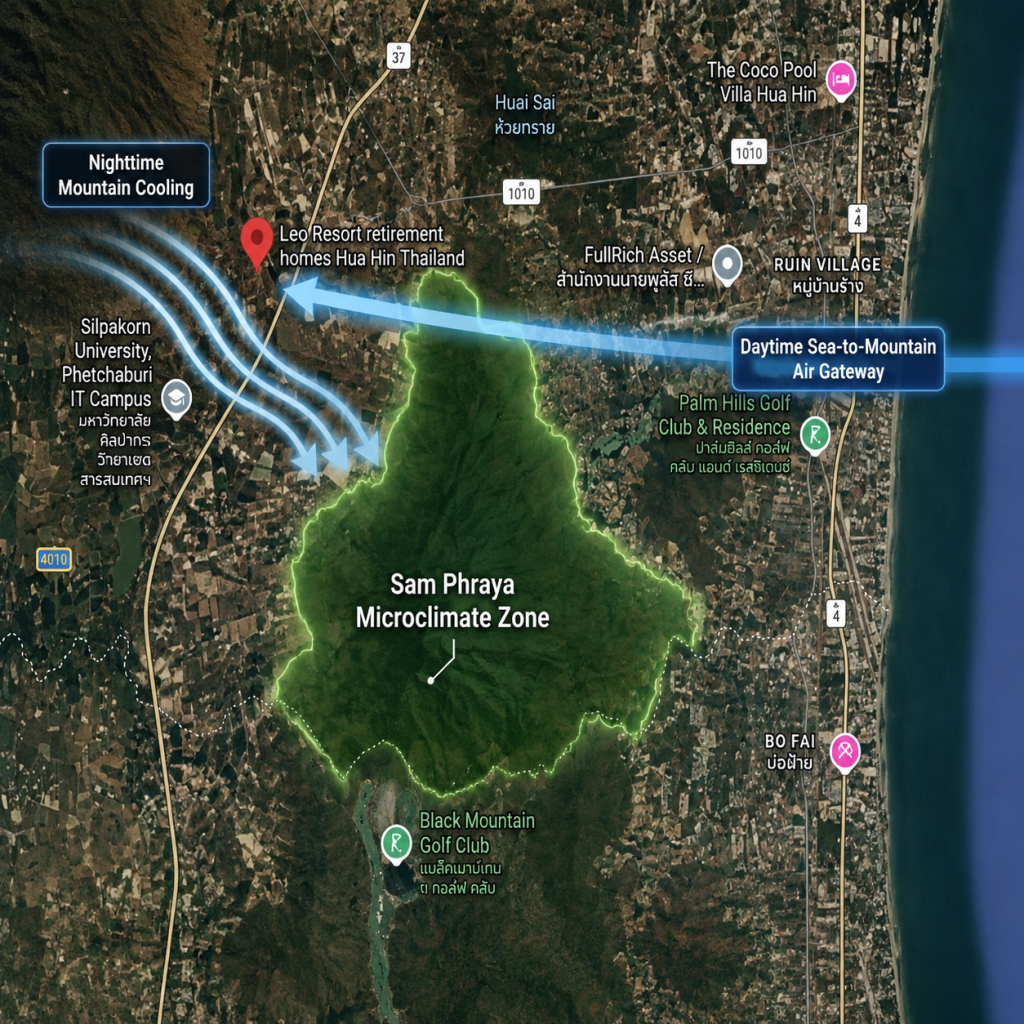
Strategically positioned at the precise coordinates of 12.663673526583837, 99.87010282883563 on the border of Hua Hin and Cha-Am, Leo Resort sits in the lush Sam Phraya green zone. This specific location experiences a beautifully regulated microclimate that cools down faster and remains significantly more comfortable than the nearby urban coastline. Below is a detailed scientific report mapping this localized phenomenon and highlighting why it serves as the ultimate foundation for healthy retirement longevity.
1. Defining a Microclimate: The Topographical Blueprint
A microclimate is a localized atmospheric zone where the climate differs significantly from the surrounding regional area due to distinct geographical indicators—such as elevation, specific wind blocks, vegetation density, and proximity to mountain ranges.
While downtown Hua Hin operates under a standard, humid tropical savanna framework heavily influenced by maritime thermal retention and the concrete Urban Heat Island (UHI) effect, the Sam Phraya area interacts directly with the foothills of the local mountain ranges. This dramatic change in the physical landscape alters the behavior of heat, air current paths, and moisture levels over our 27,000 m² environment.
2. Meteorological Mechanisms: Why the Mountains Cool the Formula
The superior evening and nighttime cooling at Leo Resort's exact coordinate grid is driven by two main geographical factors:
- Orographic Shading (Early Thermal Relief): Because the resort is located east of the rolling western mountain peaks, the mountain range blocks the harsh, low-angle afternoon sun earlier in the day. While downtown Hua Hin continues to absorb direct solar radiation into its concrete roads and buildings until sunset, Sam Phraya steps into cooling shadows earlier, allowing the ground to begin releasing heat much sooner.
- Katabatic Winds (Nighttime Mountain Drainage): As night falls, air at higher mountain elevations cools rapidly, becoming dense and heavy. This crisp, cool mountain air naturally drains downward along the slopes, flowing directly into the Sam Phraya valley basin. This evening current systematically replaces the warm air of the day with a clean, refreshing breeze, dropping nighttime temperatures quickly.
- The Absence of Concrete Heat Retention: Unlike the urban center of Hua Hin, which traps heat via asphalt and closely packed multi-story buildings, the surrounding Sam Phraya protective "Green Zone" features open landscapes and lush vegetation. Plant life actively cools the environment through transpiration, ensuring that once the sun goes down, the temperature decreases immediately.
Yearly Climatological Comparison: Average Nighttime Minimum Temperatures (°C)
Coastal / Downtown Hua Hin
Sam Phraya Foothills (Leo Resort)
3. Macro vs. Micro: Atmospheric Comparison
| Atmospheric Indicator |
Coastal / Downtown Hua Hin |
Sam Phraya (Leo Resort Microclimate) |
| Nighttime Air Temperature |
Routinely stays warm (24°C – 27°C) due to concrete thermal mass and urban trapping. |
Drops rapidly (18°C – 23°C) as katabatic winds slide down the mountainside. |
| Relative Humidity Balance |
Heavy coastal air brings high moisture levels, which can make evenings feel muggy. |
Lighter, perfectly balanced humidity levels filtered by deep mountain greenery. |
| Air Quality & Circulation |
Can experience stagnant air zones caused by dense streets and urban vehicle corridors. |
Continuous air circulation from active, unblocked mountain-to-sea breeze pathways. |
| Afternoon Radiative Heat |
Exposed to direct sunlight until sunset, maximizing heat absorption. |
Benefits from early orographic shading as the sun dips behind the western ridge. |
4. Longevity Benefits: Why This Microclimate is Ideal for Retirement
Living inside a mountain-cooled environment provides major physiological benefits that directly support long-term health span and daily comfort:
- Deeper, Restorative Sleep Profiles: Deeper sleep stages are reached much more easily when ambient nighttime temperatures drop below 23°C. The cooler Sam Phraya night air allows residents to turn off drying air conditioning systems completely during the cool season, opening windows to sleep under natural, refreshing mountain breezes.
- Safer, More Comfortable Morning Exercise: High-end retirement living requires consistent movement. The cooler morning temperatures in our microclimate create the perfect setting for early outdoor fitness routines—whether practicing Tai Chi in the gardens or following bodyweight exercises in the open-air studio—without running the risk of quick heat exhaustion.
- Cardiovascular and Respiratory Relief: Lower relative humidity coupled with constant fresh air circulation reduces structural strain on the heart and lungs. This environment is highly beneficial for older individuals seeking to maintain excellent respiratory health.
- Reduced Daily Stress and Cortisol: Living away from crowded urban centers within a visually peaceful, cooler green landscape triggers the parasympathetic nervous system. This natural setup lowers baseline cortisol levels, increases everyday energy, and promotes a deep sense of overall well-being.
The True Luxury of Natural Climatology
True comfort in a tropical environment is rarely achieved by simply turning up the air conditioning; it comes from selecting an exceptional geographical location that works in harmony with nature. Leo Resort's specialized retirement formula utilizes the mountain-side cooling of Sam Phraya to offer an unparalleled everyday living experience. By choosing a home shaped by these natural cooling systems, you ensure a vibrant, active, and fundamentally healthier retirement journey in paradise.